Does God Answer all “In Jesus Name” Prayers?

A few years ago, I met someone who candidly shared that he had lost his faith in God after his mother passed away. He described how he had prayed earnestly, pleaded with God, and truly believed she would be healed. But when she died, he could no longer see the purpose in believing in a God who, in his eyes, hadn’t answered.

After our wedding, I moved to Seattle to join my husband, who was already living there.
We had the privilege of getting to know a dear pastor—a kind and humble man we were introduced to through a mutual friend.

He and his wife welcomed us with such grace, and we quickly got to know and love them, their family, and the congregation they faithfully led.
Not long after we joined the church, he was diagnosed with leukemia. In his 60s.

We prayed.
Oh, how we prayed.

Tearful, fervent prayers. Prayers in Jesus’ name.
Prayers from a church that believed God is able to heal any illness.
Prayers from friends who couldn’t imagine this story ending in death.

But a year later—he was gone.

Those are the prayers that sit heavy in the soul.
The ones whispered through tears in the dead of night.
At hospital bedsides. In war zones. Dorm rooms. Decision tables.
The ones we end the “right” way:
“In Jesus’ name, amen.”

And yet—
some of them are met with silence.
Doors stay shut.
Suffering lingers.
The miracle doesn’t come.
A loved one dies.

If you’ve been there too—
you’re not alone. And you’re not doing it wrong.

I’m sharing what I’ve come to understand about what it truly means to pray in Jesus’ name, and why, even then, the answers we receive may not look the way we hoped or imagined.


The Misunderstood Promise

Jesus says in John 14:13–14:

This verse has been quoted in revival meetings, and quiet morning devotions. But it’s often misunderstood.

To ask in Jesus’ name is not just a magic phrase that flips a switch—it means:

It’s not a blank check. It’s an invitation to pray like Jesus would pray.

And here’s the hard truth:
Even when you do that—sometimes, the answer might still be NO.


Let’s look in the Bible, when the faithful heard “NO”

This is not new. Scripture is full of God-loving, Spirit-led people who prayed with pure hearts—and didn’t get what they asked for.

Moses

He led God’s people through the wilderness. He talked with God face to face. And he prayed:

Let me go over and see the good land…” (Deut 3:25)

God said NO.

Moses didn’t get to enter the Promised Land. His journey ended on a mountain—overlooking it, but not stepping foot.
Faithful—but denied.


David

He fasted, prayed, and wept for his dying son—the child born from his failure, yes, but still his beloved son.

Who knows? The Lord may be gracious…” (2 Sam 12:22)

The child still died.

David worshipped anyway. Not because he got what he asked for, but because he trusted who God was, even in the heartbreak.


Paul

He begged God three times to remove the “thorn in his flesh”—something so agonizing that scholars still debate what it was.

“Three times I pleaded…” (2 Corinthians 12:8)

God said no.

Instead, He gave something better than healing:

“My grace is sufficient for you.”


Even Jesus

In Gethsemane, our Savior—the very Son of God—cried out:

“Father, if You are willing, take this cup from Me…” (Luke 22:42)

But He added,

Yet not My will, but Yours be done.

And the cup was not taken away.
Jesus drank every bitter drop. For you and I!

And few moments in Scripture illustrate this better than the man with leprosy in Luke 5:12. He approached Jesus with confidence in His power but reverence for His will:

“Lord, if You are willing, You can make me clean.”

He didn’t plead. He didn’t demand. He simply believed—and submitted.

If I’m honest, I probably wouldn’t have done that.
If I were in his place—face to face with the King of Kings—I might’ve listed a hundred things. “Heal me. Fix this. Change that. Do it now.”
But this man said only, “If You are willing.”

That kind of faith doesn’t try to control the outcome.
It trusts the One who holds it.

And Jesus responded not only with compassion but with power:

“I am willing. Be clean.”

This is what praying in Jesus’ name really looks like—a posture of trust over control, surrender over strategy.


What if the “No” is the mercy?

Sometimes we ask for things that would wreck us if God said yes. Other times, we’re asking for something good—but God is doing something greater. Something we won’t understand until we look back from eternity.

What if the “unanswered prayer” was the answer?

What if God’s “no” is not rejection—but redirection?
Not punishment—but preparation? Growing & molding us?


When we don’t understand—He still is good!

This I know too well:

GOD is not cruel.

“The Lord is compassionate and gracious, slow to anger, abounding in love.” – Psalm 103:8

He is not ignoring you.

“The eyes of the Lord are on the righteous, and His ears are attentive to their cry.” – Psalm 34:15

He has not forgotten your tears or dismissed your faith.

“You have kept count of my tossings; put my tears in Your bottle. Are they not in Your book?” – Psalm 56:8

He sees what you cannot.

“His understanding no one can fathom.” – Isaiah 40:28

And when He delays, denies, or remains silent—

“Jesus replied, ‘You do not realize now what I am doing, but later you will understand.’” – John 13:7

It is never because He doesn’t care.

“Cast all your anxiety on Him because He cares for you.” – 1 Peter 5:7

It’s because His plans are higher, deeper, and more redemptive than we can imagine.

“For My thoughts are not your thoughts, neither are your ways My ways… as the heavens are higher than the earth, so are My ways higher than your ways.” – Isaiah 55:8–9

God’s plans for us are good.

“For I know the plans I have for you,’ declares the Lord, ‘plans to prosper you and not to harm you, plans to give you a future and a hope.” – Jeremiah 29:11

Romans 8:28 brings it all together.

It says:

“And we know that in all things God works for the good of those who love Him, who have been called according to His purpose.” – Romans 8:28


Keep praying, even if the answer doesn’t come

So what do we do?

We pray.
We ask boldly.
We weep honestly.
We submit fully.

And when the heavens seem quiet, we cling to the truth that God is still at work.

He is not a vending machine—He is a Father.
Wise. Just.
And He sees beyond your asking, into your becoming.

He knows what you truly need, even when you don’t.

So keep praying.
Not to bend His will to yours,
but to align your heart with His.

Not to get everything you desire,
but to grow into who He created you to be.

This is the power of prayer in Jesus’ name.
Not a guarantee of outcomes —but an invitation to intimacy, to trust, to transformation.

Think Before You Believe: Discernment in the Digital Age

📸 Hawaii

We live in a time where information is everywhere, yet true understanding often feels scarce. It’s easier than ever to form strong opinions about world events based on what we see online. I’ve seen how quickly people accept and share information without questioning its accuracy—sometimes simply because it aligns with what they already believe or because it comes from a confident voice.

I speak from experience— as someone who has witnessed firsthand the devastating consequences of misinformation. Having lived through and survived the Genocide against Tutsi in Rwanda, I know that words have the power to dehumanize, ignite violence, and lead to unimaginable destruction. But I also know that words have the power to heal, educate, and restore.

📸 Curaçao

I am not here to discredit what others write—there is value in many perspectives. But I do want to remind us to be shrewd. Not everything presented as fact is true, and not every narrative tells the full story. As a follower of Christ, I believe in seeking wisdom, and as a computer engineer, I have learned how to discern between sensationalism and credibility. The Bible itself warns us to be discerning: “The simple believe anything, but the prudent give thought to their steps.” (Proverbs 14:15)

One of the biggest challenges today is that we often consume information in small, curated portions—short videos, viral posts, or trending news snippets. But no single source can capture the full depth of an issue. Understanding requires effort. It means going beyond the surface, reading widely, listening to those who have lived the experience.

📸 Germany

If, like me, you strive to be intentional about what you consume and share, here are a few guiding principles that have helped me:

  • Verify the Source – Before believing or sharing something, check where it comes from. Is it a credible institution? A firsthand account? A well-researched piece or just an opinion?
  • Read Widely – No single source has all the answers. Multiples articles references, books, memoirs, and multiple perspectives help fill in the gaps.
  • Be Skeptical of Viral Content – Misinformation spreads quickly, and AI-generated images, out-of-context quotes, and edited videos can be misleading.
  • Seek Truth, Not Just Confirmation – It’s easy to find sources that affirm what we already believe. Challenge yourself to explore different viewpoints.
  • ChatGPT – Here’s an interesting one {as a disclaimer, this is NOT an endorsement}; ChatGPT isn’t infallible, but it can assist with research and fact-checking. You can ask prompts like: “Verify if this article is accurate,” “Is this newspaper a tabloid?” or “What are credible sources to learn more about [topic]?” to help assess information and find reliable resources. Approach answers with caution and critical thinking.
📸 Vietnam

If you are a follower of Christ:

  • Read the Bible – The ultimate source of truth is God’s Word. While history and journalism can give us facts, the Bible gives us wisdom. It teaches us how to discern, how to respond to conflict, and how to seek peace.
  • Pray for Discernment – Wisdom isn’t just intellectual; it’s also spiritual. Asking God for guidance helps us navigate complex issues with humility and clarity.

📸 Africa

One of the best ways to grow in understanding is by listening to those who have lived these realities. Here is a prompt you can give prompt for a search:

Provide a list of of reputable memoirs that offer firsthand perspectives on major world issues and conflicts, including wars, genocides, political struggles, and humanitarian crises. Include the author’s name and a brief description of each book.

Over a decade ago, I began exploring memoirs to deepen my understanding of world issues, history, and geography. I previously shared my reflections in a post titled: A Quest for Knowledge: My Journey to Overcoming Ignorance, highlighting books I was reading at the time. Since then, I have read many more and have several others lined up to explore.

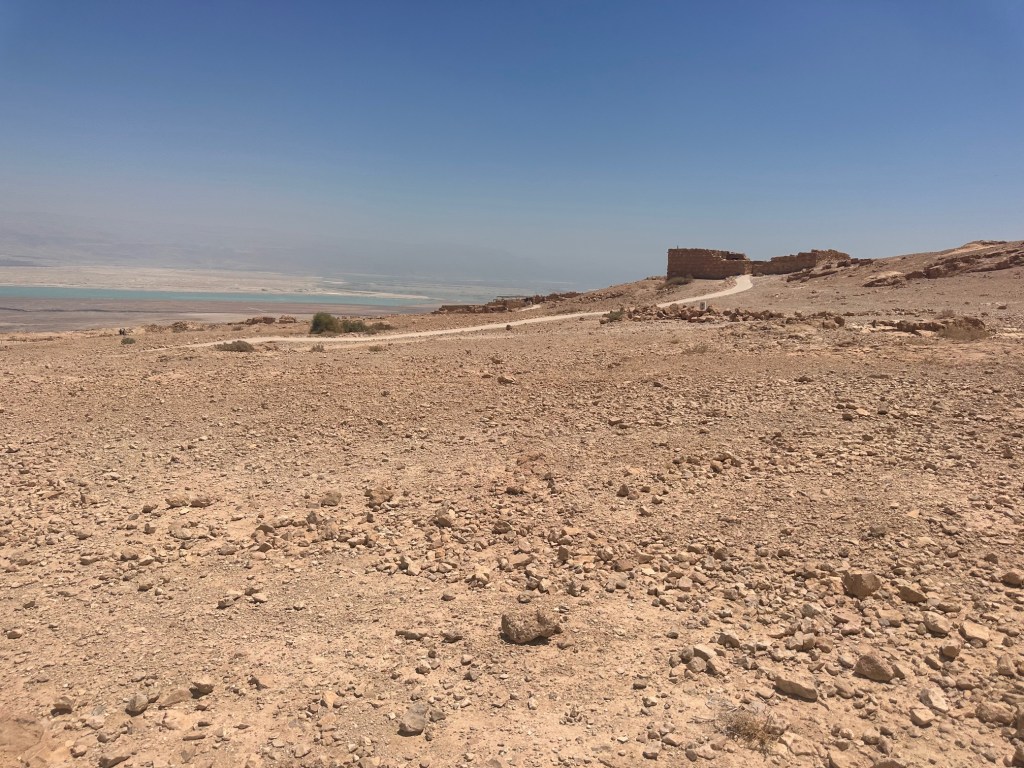
📸 The Middle East

I’ll avoid book suggestions on controversial topics to keep your search unbiased. Instead, use the example prompt example above to find documentaries and memoirs. While we all have biases, firsthand accounts offer a deeper understanding of worlds we may know little about.

At the heart of all deception is something deeper—a spiritual battle. The Bible reminds us that “Satan himself masquerades as an angel of light:” (2 Corinthians 11:14). Not all that sounds good is true, and not all that is popular is wise. But when we seek truth with humility, when we lean on God for understanding rather than relying solely on human knowledge, we gain clarity.

God’s Majestic Creation

May we be people who seek truth, who listen before we assume, and who use knowledge to bring understanding rather than division. And may we always turn to God’s Word as our foundation, remembering that true wisdom comes from Him.

Thank you for reading!

“Not all of us can do great things. But we can do small things with great love.” ~Mother Teresa

“Then the righteous will answer Him, saying, ‘Lord, when did we see You hungry and feed You, or thirsty and give You drink? When did we see You a stranger and take You in, or naked and clothe You? Or when did we see You sick, or in prison, and come to You?’ And the King will answer and say to them, ‘Assuredly, I say to you, inasmuch as you did it to one of the least of these My brethren, you did it to Me.” Mathew 25:37-40

You may have read one of the famous Bible verses on love in the book of the first Corinthians chapter 13: “Love is patient, love is kind” etc. There are a few lessons I recently learned from it that challenged and convicted me. I plan to share some details in a separate post. For now, I will simply say that I am naturally sensitive and passionate, which can be good and bad. However, I will try to focus on the good part for now.

I cannot stand injustice. It hurts so much when people are not being fair. I don’t like when bad things happen to good people. I cry when I see cruelty against innocent people. I weep in front of my TV, computer or out in the open when I see homeless children who live off of the dumpster and in the streets, homeless grownups against their will, poor and hungry people. It is heartbreaking to see people who once had it all together and wars/tragedies suddenly turn their lives upside down, into refugees, homeless, helpless and starving. Life is so unpredictable.

On Tuesday this week, a woman that I have always looked up to and admired for her courage as long as I have known her, surprised me with the news I was not expecting to hear. I was already aware that she has lost her job several months ago and had been unsuccessful to obtain another one, but I had no idea as to what extent she was struggling. I wept as I read line by line. I was very sadden by the fact that she may lose her home, a home she built by herself, along with raising her young children after she lost her husband during the 1994 Rwandan genocide against the minority Tutsi group in her late 20s.

RwandaRwanda

My heart was torn. I was at loss for words! I haven’t cried so much in a while like I did as she explained it to me over the phone. As I felt sorry for myself for being so weak and hopeless, I remembered how Jesus felt when He arrived at His friend’s house, Lazarus. As many people gathered and mourned for Lazarus who died 3 days earlier, Jesus wept, too! (John 11:35).

The Son of God wept, NOT because He was helpless like I was or often am in situations like this. In fact, His main purpose there after His intentional 3-day delay, was to raise Lazarus from the dead and glorify His Father! Jesus was moved by the pain and weeping around Him because of Lazarus. I remembered that very moment that Jesus understood my pain and indeed cared for my friend more than I did. Although I still wish I was super rich to be able give to my friend all the amount she needs, I know that a little bit can go a long way.

I launched a campaign for my friend Rose. I accepted that I may not be able to raise all the money that she needs at the moment, or that I may be surprised. Either way, I am being obedient, and trusting the Lord for His provision and compassion for His children. I have not really done any other fundraising campaign, and I absolutely hate asking money from people. Nonetheless, I also believe in God’s miracles and the way He uses His own people!

Please click here to join my campaign: Help a Rwandan genocide against the Tutsi Survivor Widow!

I cannot change the world; in fact, God knows that I am incapable of even changing a single soul. However, I am determined to do something small whenever I get an opportunity. And then, I want to leave the rest to God who is capable of answering prayers and being everything to those in need!

God bless you

Pure and undefiled religion before God and the Father is this: to visit orphans and widows in their trouble, and to keep oneself unspotted from the world.James 1:27

“It’s not how much we give but how much love we put into giving.” ~ Mother Teresa

“In all things I have shown you that by working hard in this way we must help the weak and remember the words of the Lord Jesus, how he himself said, ‘It is more blessed to give than to receive.” Acts 20:35

Sometime during my graduate studies at RIT in NY, a friend of mine asked me to help translate for a teenage girl that had been hospitalized but didn’t speak English. This girl fluently spoke one of the languages I understood from one of the East African countries. Her and I immediately connected and later, I was invited to their house to meet the rest of her family.

On my first visit, I was shocked to see how much preparation and trouble they went through to make it look like nothing close to a  simple gathering. It was like a royal dinner, composed of food varieties from East Africa to represent a feast that was apparently prepared for me: beef stew, plantains, homemade French fries, rice mixed with various spices, vegetables and many more. I didn’t know what to say. I normally have a disappointing appetite but this certainly did the trick.

As months went by and I visited the family again, it was exactly like the first time I was there. Since then, I figured that I should not tell them ahead of time that I was coming, after all we are Africans. Back home, you can simply show up unannounced! Even with short notice, they would distract me while I chatted with others, unaware that they were cooking. I couldn’t believe how generous they were.

An East African dish. So delicious!

Truth to be told, I can tell that this family barely makes their living on possibly minimum wages. How do I know? Because of their employment type. It is also interesting that they always have a house full of people, literally; some of them are relatives while some others are just strangers they shelter until they can get on their feet.

If I didn’t know what they did for a living, I would just have assumed that they were rich. In fact, this girl who is my connection to them is not even their biological child. They actually met her somewhere along the way in Africa, and took her in because she had no family or anyone else to raise her. Personally, I am always amazed by how positive they are about life. They love God, others and they are hopeful people. Their home is always open to everyone.

Watching their way of life challenged me: how can someone like them be so generous, loving and positive when they live on minimum wages with a house full of people? Each time I speak to the wife, she quotes the Bible a lot and encourages me with Jesus’ promises and hope that is found in following him. I’m always amazed by her love for God even when I can easily see that the family struggles to make ends meet!

This family reminds me of the story of the widow’s offering where Jesus commented on her offering which was two small copper coins while rich people poured gifts in the offering box. Jesus saw that the widow has put way more than all of them because rich people gave out of their abundance but the poor widow contributed out of her poverty and put in all she had to live on. It is a challenging example that we often ignore!

A Rwandan Cabbage Salad. I made this one by myself🙂

A famous Bible verse about the way of love in 1 Corinthians 13 raises a very important question about generosity.

 “If I give away all I have, and if I deliver up my body to be burned, but have not love, I gain nothing.”

Does this mean  that people can indeed give without love? The answer is possibly. Generosity works hand in hand with love. If they are separated it’s like faith without work. When this dawned on me, I desperately asked God to fill me with love first!

Honestly, it’s not always easy to be generous, especially with money and time. In fact, it is a human nature to be inclined to give or help people that we know well or care for. Of course it’s very important to ensure that your donations go to credible recipients but we sometime cling on it that we often forget that our giving shouldn’t necessarily be dictated by how grateful or recognizing our recipients are.

Also, for those who give often wonder how much is enough to give!

But I have learned that it’s not about the amount, but the heart of the giver. And that it is much more blessed to give than to receive.

I don’t know about you but I often want to hold onto what I have with excuses that I don’t have enough or that I have to enjoy the fruits of my hard work after all. Nothing is wrong with that, but after I was reminded that “it is blessed to give than to receive“, it changed the way I approached giving, loving people and generosity.

I have been praying and asking God to make me like the man that David cites in Psalm 112. Verse 5 states: “It is well with the man who deals generously and lends“, and verse 9: “He has distributed freely; he has given to the poor.”

I want to love and be generous to everyone God brings my way, and not expect anything in return. I am not the one to judge the character and be selective on whom to be generous to or not. I will leave it to God who will judge all the nations and reward everyone according to their work in this life. God is love and He sees everything. Everything I do is between me and Him, people easily forget!

“You have not lived today until you have done something for someone who can never repay you.’ ~ John Bunyan

“This Is Hope: God Is REAL”

Thank you for stopping by. I hope and pray that you enjoy my story of how I found Hope in God, through disappointment and hopelessness. Be encouraged, even when those you trust the most turn out to be “not what they claim to be.”

Although almost two decades later, I specifically chose to write this page in the present tense, to truly describe the intensity of suffering in the eyes of a young girl I was back then.

Please click here to read my story under the page called HOPE.

Many many years apart. It looks like I haven't changed much!

Many many years apart. Have I changed much?

This is my story!

God bless you,

Alphonsine

A Forgiving Heart

Forgiveness is one of the most difficult yet powerful choices we can make. It asks us to let go of hurt, pride, and the desire for revenge—to respond with kindness where we’ve been wronged, and to move forward without resentment. That kind of grace doesn’t come easily. It requires strength, humility, and often, deep faith.

As I reflected on forgiveness, I turned to one of my greatest sources of inspiration—the Bible. Time and again, Scripture presents extraordinary examples of individuals who chose forgiveness, even in the face of betrayal, injustice, and suffering.

One story that stands out is that of David.

Though anointed by God, David spent years fleeing for his life from King Saul, who was jealous and intent on killing him. David had more than one opportunity to take revenge, yet he chose restraint. In 1 Samuel 26, we see David and Abishai come upon Saul asleep in his camp. Abishai urges David to kill him, but David refuses, saying, “Do not destroy him, for who can put out his hand against the Lord’s anointed and be guiltless?” (1 Samuel 26:9). Instead of vengeance, David chose honor and trust in God’s justice.

Then there’s Stephen.

As he preached with wisdom and power, he faced false accusations, was seized, and eventually stoned to death. Yet, as he was dying, his final words were, “Lord, do not hold this sin against them” (Acts 7:60). Even as stones rained down upon him, Stephen extended forgiveness to those who took his life.

And, of course, there is Jesus.

As He hung on the cross, suffering a brutal and unjust death, He looked at those who mocked and crucified Him and said, “Father, forgive them, for they know not what they do” (Luke 23:34). This is the ultimate example of mercy and love in the face of cruelty.

These stories speak deeply to the heart, especially in a world filled with injustice. We see so much pain today—racism, discrimination, lies, abuse of power, violence, and hatred. Watching the news can be overwhelming. It’s easy to feel helpless or angry in the face of so much wrong.

Paul, in his letter to Timothy, warned of such times:
“In the last days there will come times of difficulty. For people will be lovers of self, lovers of money, proud, arrogant, abusive… heartless, slanderous, without self-control, brutal, not loving good… having the appearance of godliness, but denying its power” (2 Timothy 3:1-5).

Still, we’re called to a higher standard.

So I ask:

  • Would I want to be treated with dignity, even when I fall short?
  • When someone hurts me, do I long for them to see the pain they caused and make it right?
  • How do I want others to respond to my needs and humanity?
  • Can I offer that same grace to others?

David, Stephen, and Jesus weren’t weak. Their forgiveness was an act of strength rooted in trust—trust that God sees, knows, and will judge with justice. When we choose to forgive, we’re not saying the wrong didn’t matter; we’re saying we believe in a God who will make all things right.

So if today, you were given the chance to avenge someone who deeply wronged you—would you choose forgiveness instead?

It’s not easy. But imagine how different the world would be if we all treated others the way we wish to be treated. Forgiveness is not forgetting—it’s faith in action.