Expatriate Moments of Brevity: Life Abroad!

When you relocate to a new country, there are many inevitable awkward moments you run into, whether you’re extremely cautious or simply go with the flow. I’m not even talking about the food where it is apparently normal to add sugar to baked beans or meat, or eat jello with turkey.

It’s not about eating raw fish or crunchy little lifeless animals from the water! And I won’t go into details about a story of someone I know who yanked treats from kids as they rang the door bell for tricks or treats on Halloween. This new comer thought kids were handing out candies!

In the fall of 2006, I said goodbye to my dearest siblings and many friends who gathered at Kigali International Airport in Rwanda to send me off halfway across the globe. I was very excited about the opportunity to continue my studies and experience a new culture. My next stop? United States. The next paragraphs are my observations and experience!
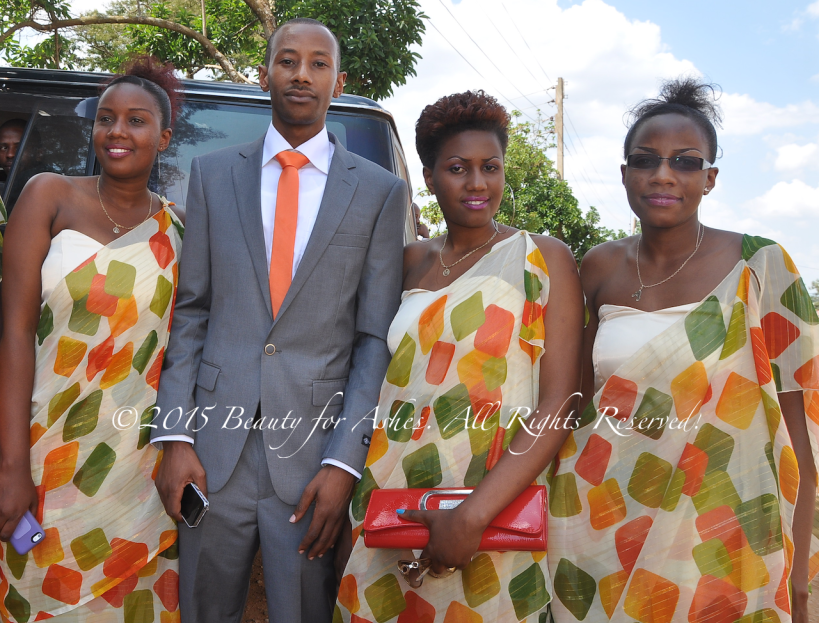
With my bro and sisters on my brother’s Rwandan Traditional Wedding Day!

  • Comparison & Conversion

When you arrive in a new country for the first time, in order to adjust, you start first by comparing everything around you to what you were used to in your home country. You compare buildings, cars, people, dress fashions, you name it.

When you make a trip to the store to buy milk and realize that it’s sold in gallons, yes a gallon (what is that?), for $3.21, you immediately convert it in your own currency to see how much that would be, for example, in Rwandan Francs. Oh, before you figure this out, you first wonder what is a gallon compared to liters etc. Then you do the math to make a decision if your purchase is ideal.

In my very first effort to get my hair done when I arrived in the US, two friends (white and Asian) took me to the best place they knew. The stylist lady who was either white or Latina (definitely not black) assured me that she knew well how to work with black hair. I was ecstatic! The whole process lasted about 30 min. I was very impressed because it normally takes no less than an hour in Rwanda.

To my dismay, not only did my hairdo look as if they didn’t do anything to the hair, but it also cost me around $80. The hairstyle I was looking to get would normally have cost me around $10 in Rwanda. That was the last time I tried…well, until an African friend took me to an African beauty salon where someone finally knew what she was doing!

  • Translation

Oh, yes! You definitely think in Kinyarwanda at first (or whichever your native language is) and translate into English before responding to someone who just asked you what courses you are taking or your major at RIT or how long you have been in the country or simply what you do for a living.

Researchers say that you will know that you are comfortable in a new language when you no longer need to translate in your head from your native language to your new one before you speak or answer a question. Caution: At some point, you may become too comfortable in your new language that you might need to translate back into your native language before you talk; isn’t that funny but true?

Few months ago at my brother’s wedding, I vowed to myself that I’d make an effort to use Kinyarwanda only during my 5 minutes speech. Howbeit, in front of our honored hundreds of guests, as I searched in despair how to say “on behalf of” in Kinyarwanda, I feigned a smile as I apologized to the audience because I had no other word to replace it in order to complete my phrase. I indeed felt betrayed by the language I have spoken my whole life 😦

  • Moments of Boldness

As funny as this may sound, it is a moment of truth! Most likely, casual, humorous conversations and jokes will be different in your home country from your new home. For example, in Rwanda, weight issues are not only an icebreaker to start common daily conversation but also a way to let people know that you pay attention to their size.

People are not afraid to remind you that you’re fat and that you should probably start exercising. This is not a private conversation. It’s in the open for everyone around you to hear. Or perhaps that you are too thin and someone fears you may not have enough food in your home.

A woman carrying a sac on her head!

So, take a person from that context and into the United States. Also note that the only English words this brave person knows how to say related to weight is skinny and fat. Well, you can connect the dots. This creates an awkward moment when you tell someone in the US, especially women, that they are fat (they didn’t just “put on a few extra pounds” because you probably have never heard of such an expression).

I think that the cultural influence, in addition to the language barrier, may bring embarrassing moments for newcomers!

I am normally very careful in what I say to people because I am afraid to hurt their feelings, but once a dear friend poured her feelings out to me and some friends. I went on to tell her it was a first world problem. YEP! I sure did! Back then, it seemed like an innocent comment to go along with our fun conversation. Now I know that it was not the case.

Oh! Did I also mention that I once told a friend I had known for a few years that it was probably about time he started thinking about growing up, because after all, it was a new year and his sense of humor wasn’t amusing anymore! Who in the right mind says that? Fortunately, this gentleman found it funny and laughed about it! A word of advice: DON’T DO IT!

      • Weird obsessions

When you move to another country, at first you tend to stick to what looks familiar. For example, when you spot at the grocery store the powdered milk NIDO used a lot in Africa for tea, you want to jump with excitement for all shoppers to know that you have found a hidden gem in your new home. Similarly, when you go back to visit your country, everything looks so amazing that you want to snap photos of women carrying baskets on their heads or babies on their backs, in the streets, or just a typical traffic jam in the city.

You cherish everything that keeps you close to things you grew up seeing. You want to take everything back with you when you return to your new home…food, clothes, traditional decorations, everything. Likewise, if you could take everything you started liking in your new home on the trip with you, you would just do it. In the end, sometimes people will notice some obsessions that seem all too unfamiliar to both cultures.

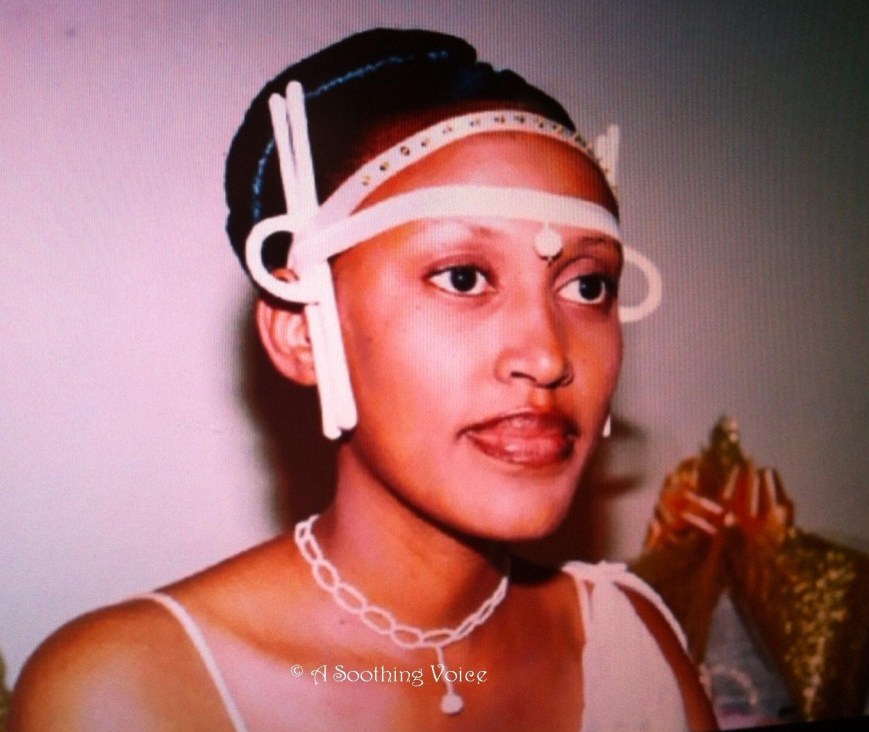
You see the first picture with my siblings where my sisters and I are wearing Rwandan women traditional outfits? Those outfits have been around for ages. They’re basically worn by women on special occasions in Rwanda. Married women can own and wear them anytime (for parties etc.) but single women mostly rent them for special occasions.

Now, I am not entirely sure why I am beyond excited to own not one, but two of those, for myself, which are the gifts my brother and his wife gave to me on their wedding day. I cannot wait to wrap one of them around me and walk in it. And why am I obsessed with this? I have no clue!
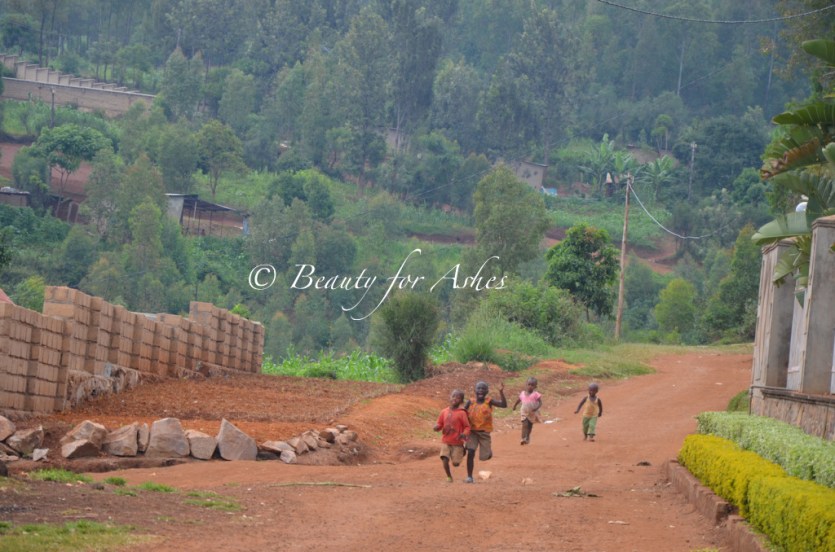
Speaking of obsessions. I love everything about this photo. Why? Every detail in the background!

      • Where are you from?

This one will probably follow you always especially if you move to a new country at an older age. Your accent will always be such a giveaway. As soon as you open your mouth, at least in the United States, people are eager to ask where you’re from. Some people are funny enough to conclude that every black person with an accent must definitely be from Jamaica, and that’s probably one of the states of Africa, because after all, Africa is one country with many states just like Unites States.

      • Challenges on both ends

As harsh as it sounds, when you go back and forth between the two cultures, you will definitely realize that you blend in neither culture. You just choose what to adapt to and what to ignore. For example, time is very important in western countries, while it doesn’t mean anything in Africa at least. When in Africa, I often find myself annoyed by people who are late for meetings, especially when they don’t call to let me know that something came up.

When that happens, people around me wonder if I just fell from another planet because being late is normal in Rwanda. Similarly, as much as I try very hard, after several years, I still struggle to find the food that I like or adjust to the cold/hot weather in the US. Rwanda is a tropical country and the weather is close to perfection: (high 50s – low 90s) all year around.

      • Language butchering

In a country that speaks a different language than yours, you will realize that when you don’t pronounce their language the same way, you may be asked to repeat. Shortly after I arrived in the United States for the first time, I asked someone a question that had “learning” in it but they definitely heard “running“. Only then I realized that, “R” is pronounced differently from “L” in English while in Kinyarwanda they are identical.

Downtown Kigali in the distance on the hilltop!

Downtown Kigali in the distance on the hilltop!

      • Lagging behind

If you visit your home country, no matter how often you do that, you will realize that you live in the past (or at least the last time you were there). You will be amazed by how much everything has changed: new fashions, buildings, roads, sayings, new obsessions. Even if little has changed, it’s a big deal to you how everything looks. The excitement may plunge you into long explanations, only to realize that you sound like you are speaking a foreign language to your own people.

Believe me! Your efforts to describe that new beautiful tall building they just built where the bus station used to be won’t seize the moment for those who have seen the building under construction the year before. The breathtaking view from the hill where you can see most of the downtown Kigali at night with its beautiful lights? It’s just in your head, no one else finds it that stunning! It’s just life, you go into a series of emotions, whether young or older.

      • Embracing the new culture

This is very important and the final phase in the process of adjusting to the new culture and definitely a big deal if you want to enjoy your expatriate life. Some people tend to stick only around the community of people from their home countries. This one may render you bitter toward the new culture when you’re faced with a situation outside your community.

I once met a man from Rwanda who had been living in the US for 12 years at the time, but this man couldn’t speak English for a whole minute, literally. I was heartbroken! Take time to get out of your comfort zone and try new things. Be patient, humble and respectful. Explore, learn, master the language, and adapt to the culture. This will definitely make your life easier.

How about you? What has been your experience in a foreign country?
God is Exalted: My Blogging Experience So Far!

When I started this blog back in July 2012, unlike most bloggers and writers I know, I honestly didn’t have a goal in mind that I wanted to achieve with it; for instance, reaching a specific type of demography, audience, how many people per month/year, or what type of posts to focus on, not to mention that English is not my 1st or 2nd language, can’t you tell ;).

Back then, I didn’t know how to work on a website, leave alone writing a blog that people would be interested in visiting and reading. I didn’t really have an exciting adventure to share with the world. I didn’t just move to a new country or enter a new era such as motherhood, a new career or discover a hidden talent. I was not a blossoming writer who was embarking on this journey with skills to enlighten people’s ears, hearts and minds.

Thankfully none of my friends asked me what I wanted to achieve through this blog. I honestly wouldn’t have had an answer to that. I mean, who else starts something without short/long term goals in mind? Anyway, now you know who I am, a blogger without blogging goals. Well, may be not so fast. There is one important thing that I haven’t noted here yet, it can may be help you judge then?

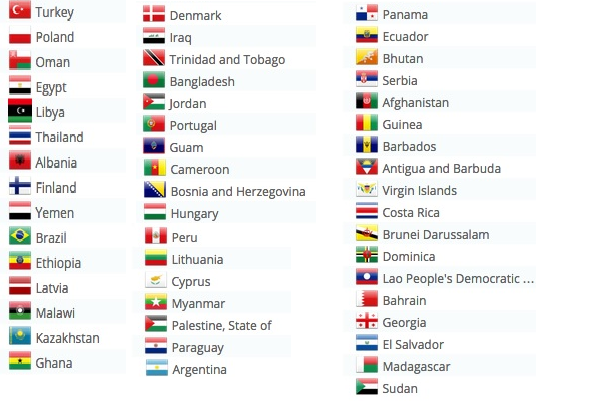
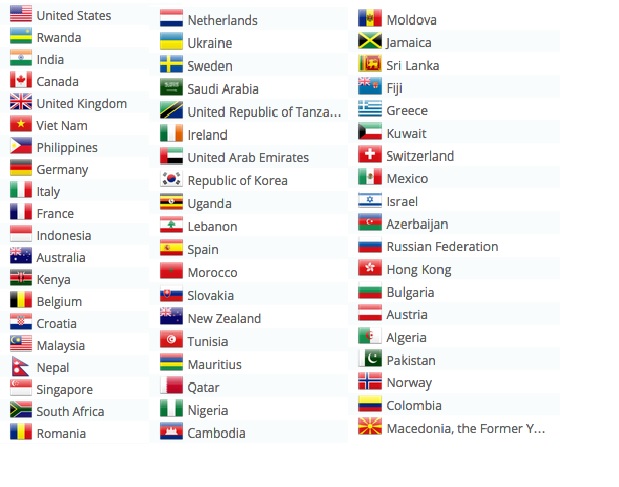
Part 1: Most visitors on this blog are located in United States, then Rwanda, India and so on.

Part 1: Most visitors on this blog are located in United States, then Rwanda, India and so on.

As a genocide against the Tutsi survivor and orphan by definition, God Has done so much in my life that I was feeling selfish to keep it to myself. If I started writing one by one, it will not be just one book, but multiple. Because God is great in me, that’s why I started this blog. If you look close, I have no talents! The credit goes to GOD.

I hope that this is convincing enough to you; I am very grateful for your time reading this. Oh by the way, although I must say that I have been learning a lot about blogging since 2012, I am still a work in progress. My full time job? I am an engineer, hopefully that explains it, or may be not.

What the above stats mean, it’s not about numbers; absolutely not. It’s a prayer to each and everyone who reads this blog that they will learn and/or be encouraged by the God who changed my life for good. I am so thankful to all my readers in the listed and unlisted countries.

Part 2: Continuation from Part 1

Part 2: Continuation from Part 1

My prayer today is that God who has been amazing to me in Rwanda, United States and other places, that He will build his kingdom wherever you are as you read this, win all the nations back to him and that his name will be lifted high.

Am I allowed to have favorites since I am the one who wrote these articles? May be! I love every post I have shared but here are the top 10 among my readers (statistics) and myself. Click on any of these below to read details and you will understand the reason I blog:

  1. In A Garden of Fame Where Their Treasured Memories Grow Fonder
  2. “To describe my mother would be to write about a hurricane in its perfect power.” — Maya Angelou
  3. Inconceivable Heroism Amid Horror
  4. Rising From Ashes: Beyond Broken Memories!
  5. Is it Always Possible to Forgive? This is how I understand it!
  6. Hope
  7. God is not “Fair”, He is JUST!
  8. The Truth Behind My Smile
  9. It’s not how much we give but how much love we put into giving.” ~ Mother Teresa
  10. My Soul Magnifies the Lord: Now & Always!

God bless you,

Alphonsine

Rising From Ashes: Beyond Broken Memories!

“Lord, I have treasured your word in my heart, that I may not sin against You”  Psalm 119:11

Growing up in a joyful, loving family with the most devoted parents a child could hope for, nothing could have ever warned me—or prepared me—for the horror that would soon unfold.

For those unfamiliar with my story, I was in 7th grade when Rwanda was plunged into one of the most devastating atrocities of the 20th century: the Genocide against the Tutsi. In just over three months, more than a million Tutsis were brutally killed—including my parents, two of my siblings, relatives, friends, neighbors, and fellow citizens.

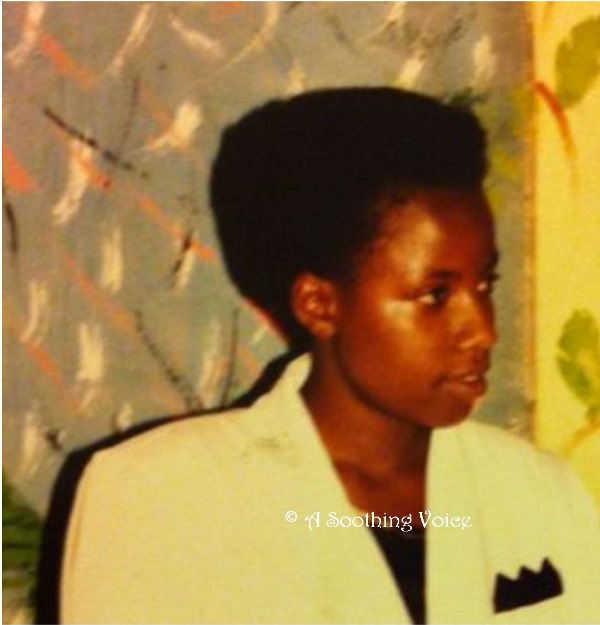
9th Grader

Me, sometime between 1995 and 1996

Before the nightmare could end, everything felt surreal—almost beyond comprehension. I was completely alone and abandoned. The first person to offer me shelter was my uncle’s wife, whom we encountered in a refugee camp in the heart of the capital during an evacuation.

After the genocide against the Tutsi ended, I had no idea that what awaited me was not refuge, but exploitation. My aunt had effectively found a nanny for her two young children.

Months later, unaware that I had survived, my mother’s youngest sister, Beata, saw me on my way home from school. Upon learning of my living conditions, she quietly took me into her home. Beata worked for the government, and her husband held a position with the United Nations—on the surface, a promising new beginning. But what I hoped would be a place of healing quickly turned into yet another chapter of hardship.

Despite their resources, my basic needs were neglected. I was denied essentials like sanitary pads, and only received clothing and shoes when Beata no longer had use for them—after she had indulged herself in expensive outfits. Behind the walls of their mansion, I endured relentless emotional abuse. I wasn’t treated like family—I was treated like a burden.

As I tried to adapt and remain grateful for a roof over my head, the atmosphere grew increasingly hostile. Beata, perhaps threatened by my presence as I came of age, became controlling and cold. I was no longer allowed to eat with the family or speak freely. Even the few clothes I owned were closely monitored. Eventually, I was confined to my room, kept out of sight, and falsely accused of stealing money, all while being tasked with carrying heavy groceries alone—despite the family owning a car.

Then, one day, Beata told me to leave. I didn’t know what crime I had committed—only that my presence was no longer tolerated. As I stepped into the unknown, I began a long, painful journey toward healing. For years, I struggled to believe that not all married women were cruel. I entered college while navigating deep darkness, often relying on the kindness of strangers for a place to sleep. I came dangerously close to calling the streets my home—or worse, compromising myself just to survive.

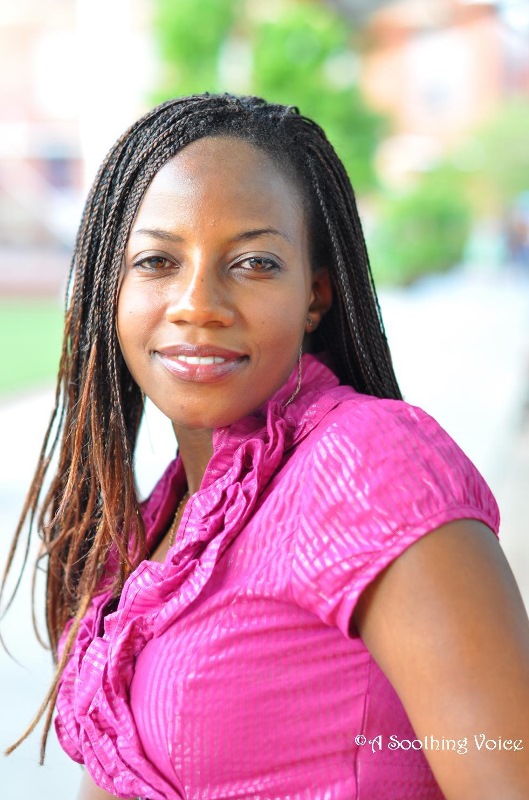
August 2012

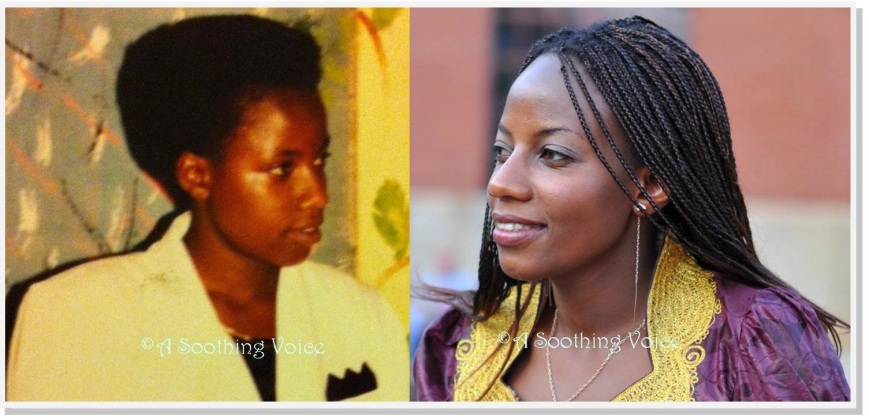
Me, August 2012

Despite the unimaginable losses and hardships I endured, I graduated among the top of my class with a Bachelor’s degree in Engineering and secured a full-time job just days before graduation. Three months later, I received a full scholarship to pursue a Master’s degree in Engineering in the United States. In time, I was offered my dream job.

By God’s grace, I was also able to support my three younger siblings—Eric, Alice, and Mireille—through school. All of them, who were under 10 during the genocide against the Tutsi, were on track to complete their university degrees by 2014.

I owe every blessing in my life to God, the Father to the fatherless, who never left my side—even in the darkest moments. He sustained me, lifted me, and gave me the strength to forgive and move forward.

I am deeply thankful for:

  • His unconditional love and grace that empowered me to forgive those who hurt me, including those who took my family and those who failed me when I needed them most.
  • My siblings, who are my greatest joy and lifelong responsibility. They are my sunshine and purpose.
  • A new home in a faraway land, where love and healing replaced fear and loneliness. I am forever grateful to my adoptive parents, whose words—“You will always have a home here”—are etched in my heart.
  • A fulfilling career and a company I love working for.
  • The Summit Church family, where my faith continues to grow.
  • Friends who have walked this journey with me—across continents and cultures—filling my life with encouragement and joy.
  • Opportunities to speak and share my testimony, and to be featured in blogs and journals by amazing women like Kimberly Kaye Harms and Felicia Alvarez.
  • Pastor J.D. Greear and his family, whose love, support, and hospitality have been a blessing beyond words.
  • Andy Rogers of RBC/Discovery House Publishers, who is working to include part of my story in Our Daily Bread.

Looking back, I am in awe of how far I’ve come. I don’t know what the future holds, but I know Who holds it. My heart is open, and my answer to God remains: “Yes!” May He continue to use me to bring hope to the hurting, the homeless, the orphaned, and the forgotten—because I’ve been there too.

Don’t let past pain define you. Overcome evil with good. As I look ahead to the future with hope and expectation, I pray that 2014 and beyond brings you peace, joy, and purpose.

Inconceivable Heroism Amid Horror

My siblings and I grew up in a large family: two boys and four girls. I am the second and oldest girl; but this post is not about me. I want to share with the world about the fourth child, my little brother Jean Eric Claude. I vividly remember when he was born, I was almost 5 years old. He was a big baby (about 10 pounds), extremely beautiful with chubby cheeks and so much curly hair. I asked my mother if I could hold him, but I was unable to because he was too heavy for me. I am sure you are wondering if I am describing the right person basing on the below picture. By the way, that makes two of us! I am not sure how he grew up to become thinner than the rest of the family.

When Eric was young, him and I used to fight a lot. I am sure I provoked him but he was not that easy either. He played outside always, and was injured all the time from different utensils he collected or perhaps some fights he may have been involved in. He was a stubborn little guy.

On Sunday afternoon, April 24th, 1994, exactly 17 days since the genocide against the Tutsi began in Rwanda, everything changed! God must have stirred something unimaginable in this 8 year old’s heart after my Mom, my old brother Jean Felix, my cousin and I were led by the infamous interahamwe militiamen to the mass grave in the lower Kanombe, suburbs of Kigali, to be killed.

Sparing you the details for now, I miraculously survived but my Mom, brother and cousin didn’t. Although death was everywhere, I undoubtedly cherish that afternoon because God gave me another chance to life. However, the same day I got separated from my brother Eric, and sisters Alice and Mireille, who were all under 10. At this point, they were so certain I was dead, and I thought the same for them.

My handsome brother

My handsome brother, now a grown up man! I’m eternally honored to be called his sister.

With no instructions on what to do next or a moment to think about it, my baby brother immediately assumed the role of a big brother and a parent. Fleeing amid rain of bullets, blood thirst machetes and hiding in unfamiliar areas, he tied up a piece of blanket around his neck so his two sisters could hold on to it.

Sigh…

I often wonder how the blanket didn’t choke him or how he figured out that this would be the best approach for his dear sisters. Few times, the youngest Mireille who was 3, got separated from them; unable to decide what to do, she would simply stay wherever she was left. Was she scared? When you are aware that death awaits you any minute, the sense of feeling becomes numb, even at such age.
As soon as my brother realized that she was missing, when parents left babies to cry to death and everyone was just running for their life, my brother turned around to look for Mireille. No wonder why their hearts have been knitted together ever since!
Also each time they found something to eat after days, my little brother would let my sisters eat first. After they have had enough in their little tummies, only then he would grab some.
Their stories after we got separated still wound my heart greatly. It certainly is where my forgiveness is tried the most. But I praise GOD, for keeping them safe, allowing me to be part of their precious lives, and His amazing Grace!

The spoiled brat quickly became a MAN at that young age, a selfless one. I doubt I would have been able to put my life in danger to find my little sister or keep them safe, when sounds of terror and weeping voices of sorrow rang across all corners of the country. Only extraordinary, rare people would do that. I often wonder what was in his mind, but the LOVE he had for his little sister sure overcame his fear and selfishness of saving his own life. God Almighty knew well that I was incapable of doing such a heroic act and led me alone.

Mireille and Alice: My greatest happiness!

My Beautiful Girls, my Greatest Blessing, my Treasure! Mireille (left) and Alice (right).

Only those who have been through a genocide can understand my inability to describe the cruelty of the humans who became ferocious animals: babies were cut out of their mothers’ wombs and smashed against walls; relatives denied each other, neighbors turned their back on their friends, husbands killed wives and children, hell engulfed Rwanda. Amid terror, my little brother didn’t care about death that surrounded him, and God used him to keep my little sisters alive. He is my hero, my best friend! If I could get hold of the whole world, I would freely give it to him; if I was part of the Nobel Prize organizing committee, he would get at least a few of those!

My brother’s last name “Mudacumura”, means “innocent in both English and French. This truly depicts who he is. He has every quality you can possibly look in a great man: selflessness, humility, passion, compassion, a big heart, brilliant, kindness, funny, sweet, down to earth, loves God, handsome, a true gentleman! Until this day, he puts his siblings’ interests before his. He is the rock of our family, an exact replica of our father.

I CANNOT wait already for the day he will tie the knot with this incredible woman of his dreams, probably the luckiest girl on this planet. No one deserves happiness more than him. And I can’t wait for the day we will again see our parents, so I can narrate all about a little boy they left behind, now the most amazing man in the whole wide world.

I love my brother with everything functioning in me. Him and his two sisters are the reason I am alive, there is no doubt about that.

They will never, EVER, need anything my ability can provide; God and my parents in heaven have my word!

It hurts my feelings when I think that one day I may not be the first person they all run to for help. Of course I work hard for their independence, but it will greatly shatter my heart. They will always be my children, little in my eyes. And they certainly have all my love and attention, all my days!!!

And this, my friends, is the source of my strength and hope: God, the great I am!

“Rwanda…..is it that next to Texas?”

No kidding. I wish this was a joke but it actually happened, when a Northeastern man, who shall remain nameless, approached one of my friends to ask where she is from. It is true, United States is massive, with many large states that I call countries. By the time you fly from New York to LA for example, someone who had left about the same time may have landed in London and rested. Rwanda is only 395.18 sq miles larger than the state of Maryland. Maryland ranks 42nd in size, out of 50 states. Per Wikipedia, the continent of Europe is only 135, 899 sq miles larger than the United States as a country (this includes water for both). So don’t blame me if I call states countries. It’s no wonder some Americans imagine their country as being almost the whole world and everything else tiny and surrounding it.

Some citizens, especially in New York City have this pride of thinking the city as it being the whole state. I attended grad school in Rochester, NY. Recently though, I met someone in Long Island who is from Brooklyn; when I mentioned that I lived in New York, this person answered: “FYI, we don’t consider upstate as a part of New York.” Go figure! Oh and by the way, there is a map that shows how a New Yorker sees the rest of the US. I did not want to attach the image because it uses some language I wouldn’t feel comfortable sharing, but New Jersey is apparently considered the armpit of NY. The mid west is called Tornadoes and Jesus and it has just one big city or something (Chicago!); the north west is a place you fly over to get to Seattle. And that’s the entire north, pretty much. I am sure a Texan sees United States differently too. You gotta love these people.

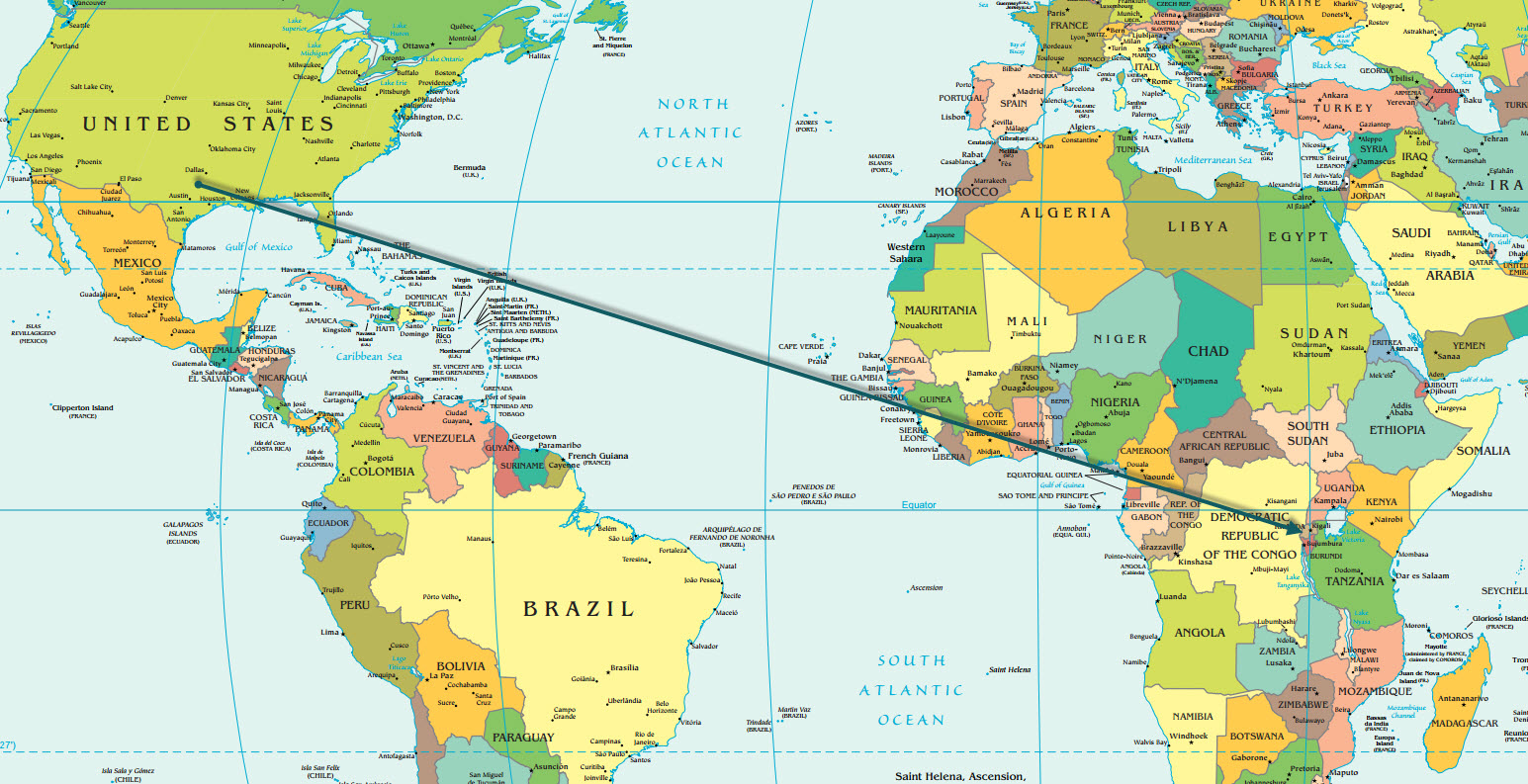
8391 miles apart
Kigali is about 8391 miles from Houston 😀

So you see, it’s not just the rest of the world viewed as a miniature by some Americans, it’s everyone else. As an advice, if you are from another country, don’t be offended if someone tells you that they never heard of your country before. Many Americans have not visited all 50 states either. But I just like the sense of humor in it all. One day, I volunteered for the Shepherd’s Table Soup Kitchen, a Christian organization that feeds the homeless. I met a very sweet woman, probably in her 60-70s. Shh, I am terrible at guessing age. On one occasion, I met an other lady on the plane and we became friends. During one hour flight, she insisted so many times that I guess how old she was. When I relented, I was 10 years off :(. She really looked like my auntie Angela who is 95.

So this wonderful lady at the Soup Kitchen asked me where I come from. By the way, some people think Africa as one country, so often I try to spare details and introduce myself as from Africa. Normally when I say just that and someone answers: “cool”, then I know they don’t really know much about Africa or where it is. But I wanted to keep a conversation going so I asked this lady: “Do you know much about Africa”?  And the sweet lady answered innocently with excitement: “Yes of course I do. I have been on a mission trip to HAITI”. YEP. True story!

Actually, I was not any different before I first arrived in the US. I thought that Canada was in Europe, because they speak French. I was shocked that just on the other side of the Rochester’s Lake Ontario lay the Canada’s Toronto. BUT this was my ignorance; since last year, I made it my goal to learn the world map. I must say that I am doing pretty good. My intention with this is not to point out anyone’s flaws or judging. I am just writing what I have seen, that’s all. We are after all brothers and sisters.

  • Weight versus Age

These two are a big deal in these two countries, and this is especially for just women. Back home, some women throw birthday parties until they turn 25, and after that, they just stop counting. The following year may be another 25th birthday. Unlike in the US, I don’t remember the last time I was asked about my age in Rwanda. At a birthday party, you come, eat and go. You simply don’t ask how old someone is. It’s not being rude, it’s just our culture I guess. After I arrived in the US, I was shocked to hear someone asking me how old I am, in front of a group of people. Seriously? Why? I wondered. But in the end, I realized that it’s just as asking your name. BUT the weight, it’s a no no. Do never ask someone around here how much they weigh.

On the other hand, the weight number isn’t a big deal in Rwanda; but the way we approach it, it can get sensitive and personal. It’s just more than asking you how much they weigh. If you gain so much weight in Rwanda, someone may walk to you and let you know that you might be bursting out soon if you do not stop eating whatever you are feasting on those days. They will remind that you should join a gym or starve. They don’t use polite or sweet expressions such as you have put on a few pounds; they will make you aware that you are fat. Facebook isn’t that helpful either; if you post a picture, someone may ignore a cute dress and shoes you have on to comment that you are simply huge and asks you what had happened to you. We somehow learned to laugh it out. After being in a culture that reacts differently, it made me wonder if it hurts people back home to be told such things.

By the way, did I mention that gaining weight may be a complement somehow? When a woman gets married and doesn’t put on few pounds, she must not be happy in her marriage. Losing too many pounds may be equally negative. When I first arrived in the United States, I lost several pounds; it took me a while to get used to the food around here. And guess what? Rumor had it that I must be poor and starving here. Yep. As a proof, most my Facebook pictures have such comments asking me why I am so thin. Of course this is nothing hurtful comparing to gaining weight.  Don’t get me wrong, Rwandans are the most hospitable people I have ever met. This is just another casual conversation. I will write more about hospitality in my next post.

One day I joked with friends about this weight topic. One of my friends made it clear to me that she would rather be asked how old she is than her weight. She is very tiny by the way. And I let her know that I would rather repeat my weight to everyone rather than my age. It is very interesting how different cultures can be. Needless to say, that night was full of laughter. Our mutual friends teased this friend that next time when they see her with a few extra pounds, they would ask her if she’s been feasting on McDonald’s. Another friend mentioned to me that if she came to Rwanda and someone told her that she looked fat, she would simply cry. Sadly, I told her that I was just preparing her in case it happens!

  • Being On Time

This is just a language we don’t speak where I come from. When I first arrived in Rochester, New York, I was blessed to have someone to give me an advice. He was a Rwandan Professor at RIT. He said that if I wanted to succeed in this country, I would have to be on time. He said that if it’s 10 am, I should plan to arrive anytime before 10 am and wait by the door if needed. He made it clear that if I was a minute or two late, they may not take me in. I was scared and in rush always. Why is that? Okay so in Rwanda, when you arrive at a place on time, it probably means you are not that important and have nothing else to do. If you were such an important person, you would have been busy with other things.

It took me a while to arrive at 7pm to a party that starts at 7. Not because I am important, but because I was used to show up when I can. Ceremonies in Rwanda end when everyone leaves! When you host a party, 7pm probably means 9pm. And people won’t even display any sign of remorse for making you wait for them, or arriving late. Everyone just somehow thinks that the time is there to get you going, not necessarily to follow it. One American writer who currently lives in Africa said it well: “the African time runs a couple of hours  behind the real time”. This is nothing but the truth!

If you have lived in another country, what were key takeaways in the new culture comparing to yours?

“This Is Hope: God Is REAL”

Thank you for stopping by. I hope and pray that you enjoy my story of how I found Hope in God, through disappointment and hopelessness. Be encouraged, even when those you trust the most turn out to be “not what they claim to be.”

Although almost two decades later, I specifically chose to write this page in the present tense, to truly describe the intensity of suffering in the eyes of a young girl I was back then.

Please click here to read my story under the page called HOPE.

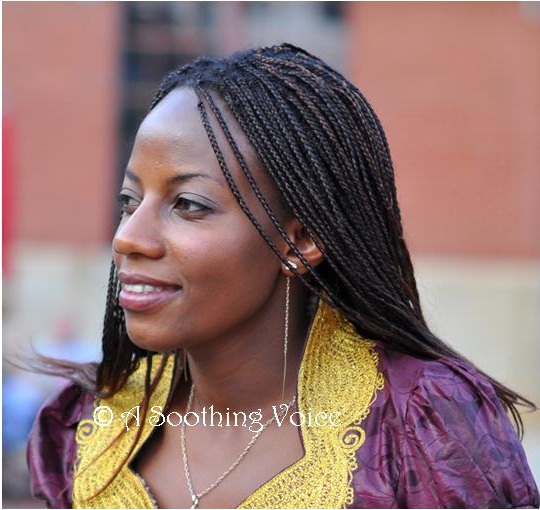
Many many years apart. It looks like I haven't changed much!

Many many years apart. Have I changed much?

This is my story!

God bless you,

Alphonsine

“You Are All Invited”

This is probably not a phrase you hear or see often, at at least not in America, especially on a wedding invitation! However, this sounds all too familiar to anyone who has been invited to a wedding in Rwanda.

Before you are pronounced “husband and wife”, or more specifically say “I do”, it is customarily to go through THREE different types of wedding ceremonies in the Rwandan culture: the engagement party (dowry distribution), the town hall (before the mayor), and finally the church wedding. The engagement party is in normal circumstances a 2-3 hour ceremony where the groom’s family & friends metaphorically bring a dowry to the bride’s parents’ house, to ask her hand in marriage.

My best friend during her engagement party (2009). Probably the most beautiful bride I've ever seen!

My best friend during her engagement party (2009). Probably the most beautiful bride I’ve ever seen!

Traditionally, a dowry used to be mainly a cow (a symbol of wealth in Rwanda, and still applicable in some areas); but nowadays, it’s mostly money in cash. Depending on the arrangement between the groom and the bride’s family, this amount of money is most of the time handed to the bride-to-be in advance for the wedding shopping spree. Even so, there still has to be a gift exchange during the ceremony(if not a cow), as a symbol of a dowry. The second part to the engagement party is that it’s the day the bride actually receives her engagement ring (in the western term: the proposal), in front of all guests.

Engagement Party Decoration Example

Engagement Party (Traditional) Decoration Example

Few days or weeks later, the groom & the bride, along with their witnesses have to show up before the district mayor in order to become legally married, since churches don’t have a power to legally marry people in Rwanda as of this writing. The process lasts about an hour or so, and is followed by a small reception.

Finally, few or several days later, it is the final day in the process where, in a church, the priest or a pastor officiates the wedding and the couple exchanges vows, rings & I do’s. This is followed by a reception (it can last up to 5 hours), and everyone, I mean “everyone“, attends. You purposely have to rent a gigantic reception hall, unless you can’t afford it or don’t know a lot of people.

The wedding invitation cards are distributed a month or two before the wedding, and not only it reminds guests that it would be the couple’s pleasure if everyone could be there to celebrate with them, but it also specifically stresses: “you are all invited“. In other words, you have to hand out an invitation card to everyone you know: co-workers, classmates, neighbors, church members, acquaintances, friends, relatives etc. Even better, now with the use of social media, people either post the entire wedding invitation on Facebook visible to the whole world, and/or create a Facebook event where they invite you without even knowing if you are in the country or not.

Therefore, if you have a cousin/friend who’s in town visiting and other friends you were supposed to hang out with that day, you all simply make a trip to this wedding reception. In the end, the total number of guests may range anywhere from 300-1,000 people, sometime more, depending on how famous you are, not to mention that since the invitation card isn’t required at the door, anyone can show up as they please. For that reason, most of the time you cannot feed them all, and you may never know that they were at your wedding.

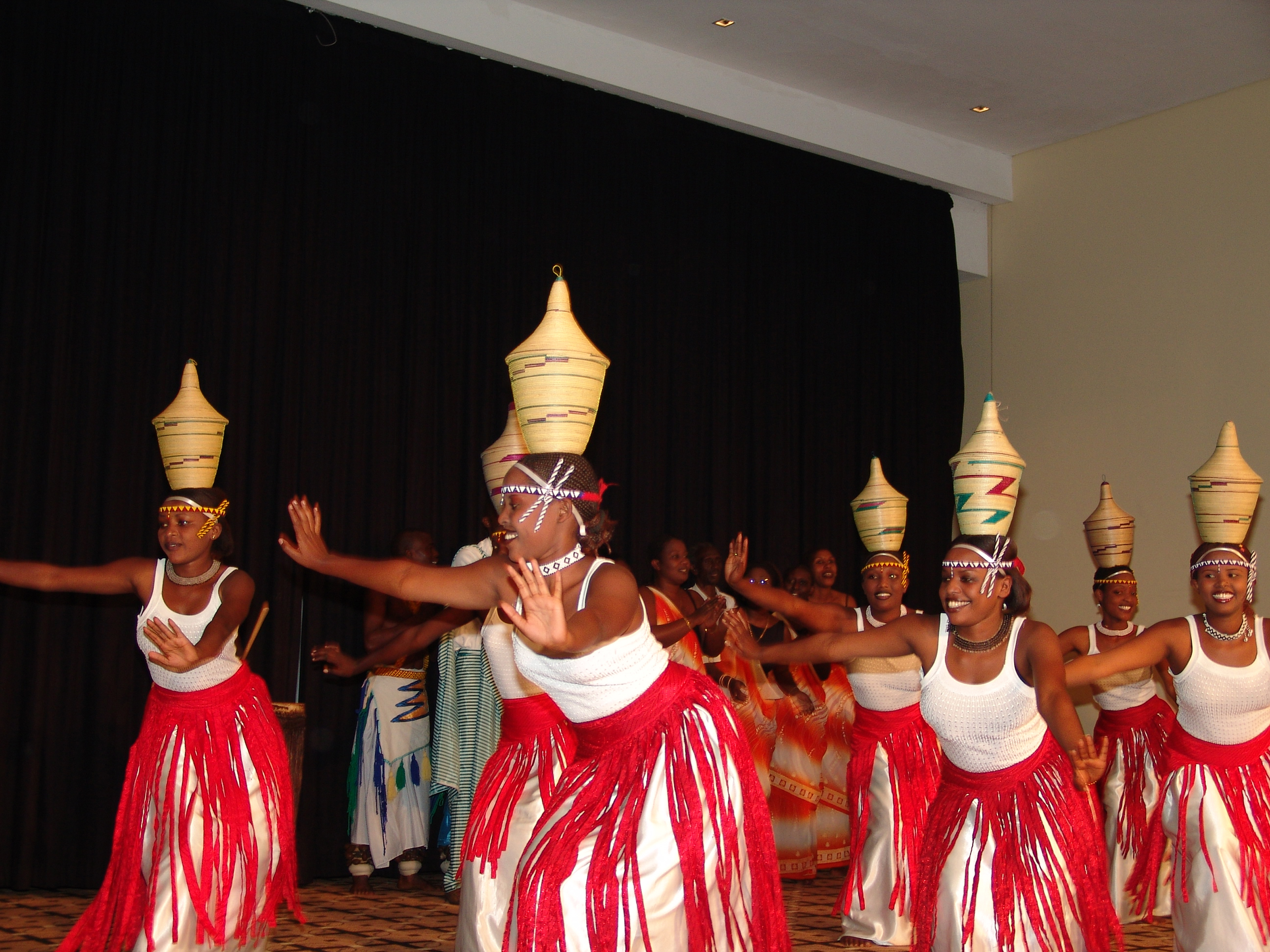
Rwandan Traditional Dance

Rwandan Traditional Dance

Needless to say, the Rwandan wedding ceremonies are amazing and I still believe they are the best out there: the music, songs, outfits, cultural dances, beautiful people, extremely eye satisfying! And like they say “the more the merrier,” you do not need to hire a wedding coordinator: your friends do everything for you at no cost. Besides professional tasks such as photography, video shooting, hall decoration, food preparation, etc, friends are likely and eager to help out as if it’s their own, as well as contributing some cash.

With this in my head, I was extremely sad when a co-worker at my first job in the United States got married and I wasn’t invited. I wondered what wrong I had done, to not be included. And I was even surprised to hear her sharing the wedding details and excitement; in Rwanda, if you aren’t planning on inviting someone, you simply don’t say anything to them. Only later I learned that around here, people invite a specific number of people, just family and close friends. And the ceremonies are much more smaller, private! It makes sense.

While the newlyweds in Rwanda will definitely not know every single person who made it to their special day, at least not until they watch their wedding DVD and see pictures, in the United States, the bride and the groom specifically walk around to say hi to their guests and thank them for coming. They also make sure everyone who attended feels welcome, gets food, and a seat!! Back home, if you arrive late to a wedding (not to mention that the “Rwandan time” runs a couple of hours  behind the “real time”), you may risk to stand in the back, since seats are first come first serve, unless you are a family member, a close friend or an important person in the wedding.

Church Wedding Day Convoy

Church Wedding Day Convoy, it may consist of a large number of cars

So this week, I received a wedding invitation from a friend I had known a little bit over a year. I was deeply touched because I am not that “very close” to her. Now that I learned that to be invited to someone’s wedding is an honor, I treasured her invitation and couldn’t wait to tell her how excited and special I feel by her invite. I am honored!

The Truth Behind My Smile

I will tell of your name to my brothers; in the midst of the congregation I will praise you.” Psalm 22:22

Thank you for stopping by. God has put something on my heart that I hope and pray will encourage you. Even if everything else I write here is forgotten, I hope this post forever remains a testimony of my gratitude to God Above ALL.

Bene

It is doubtful whether God can use a man greatly, until first He wounds him deeply.”
– A.W. Tozer

The reason that I am deeply rooted in God does not revolve around all the great opportunities and choices the first world countries have to offer. It is not measured by the credibility of schools I have had the privilege to attend, a job I always dreamed of, the greatest company I work for, the wonderful church I am honored to be part of or things that I achieved in my life. And it’s definitely not because I have nothing better to do.

My life song is about the God who picked me up right after I lost parents at a very young age, hopeless and homeless. It is about the Most High, the Father of the Fatherless who never left me alone. He was there as I juggled and learned what it was like to figure out life all alone when no one else cared. He is the strength behind my growing up in Rwanda. Through struggles of all kinds, He alone kept me going. He is the Comforter who walked with me through the days I spent in the college campus clinic. Attached to an IV, I could not attend most of my classes because of stomach problems resulting from the genocide against the Tutsi aftermath. Yet I graduated with best grades.

Most of the time, materialistically I had nothing, but Jesus shined through every little thing I possessed to make me look like I was just a regular happy college girl. When I didn’t have food for a couple of days, my physical appearance didn’t change a bit to reflect the starvation. It is God who provided for my siblings when I was a student and didn’t have any income. He was right on time and didn’t let them drop out of school or starve. He was our shelter when we’d have been homeless. It is God who patted my back, and with a soothing voice told me that I was not alone as I prepared for the state exam at the end of high school to qualify for college, when the only door to my promising future seemed to be closing.

He raises up the poor from the dust; he lifts the needy from the ash heap to make them sit with princes and inherit a seat of honor.” 1 Samuel 2: 8

I have done nothing to deserve to make it to this day. My parents and many other nice people didn’t make it to see what I see today: It is GOD’S GRACE, LOVE & MERCY. He is my only REFUGE. “For I am sure that neither death nor life, nor angels nor rulers, nor things present nor things to come, nor powers, nor height nor depth, nor anything else in all creation, will be able to separate me from the love of God in Christ Jesus our Lord.” Romans 8:38-39

My faith in Christ my Savior, is beyond the shadow of doubt. It has been perfected by the pain, suffering, loss, poverty, disappointment, shame. If there is one thing I am so certain about, it is the hands of the TRUE GOD on me. I am very grateful that I don’t have a “to-do list” to be accepted by the Lord. Jesus endured it all, on the cross, on my behalf. And GOD accepts me just the way I am. He Has won my full attention and captured my heart, for all my days.  To this day, what He has done in me is far ENOUGH to ensure me that every promise He made will be fulfilled, in His timing. Because God is not a human being that He should lie. However long it takes, I will wait. Yes, because the one who started the good work in me is capable of bringing it to completion. Until that day comes, I will still pray, love, hope, trust, seek and rely on Him.

This is what keeps me going, even on the worst of my days, when fear cripples me. I don’t have it all figured, but I have GOD.

What is the reason behind your courage, testimony, brevity? If everything else fades, where is your safe refuge? If it’s the true God, cling to Him, you will be truly SAFE in His arms when trials and tribulations come.

God bless you.

God is not “Fair”. He is JUST!

By definition, being fair means being free from bias, dishonesty, or injustice. A fair decision, a fair judge—something done properly under the rules. When we receive what we rightly deserve in a good way, we call it fairness. Ideally, systems of justice should be fair.

But God is not “fair”—at least not by human standards. Fairness, as we define it, is shaped by our perspective, not His. Take Psalm 103:10 (NKJV): “He has not dealt with us according to our sins, nor punished us according to our iniquities.” That’s not fairness—it’s mercy. And if you keep reading through verse 14, mercy, not fairness, becomes the focus.

If God was fair in the way we expect, tragedies wouldn’t happen. He doesn’t cause them, yet He allows them. And yes, He has the power to stop them. But we often try to make sense of pain through our human lens of what is “right” or “fair”—which doesn’t always align with God’s greater purpose.

Consider these examples:

The tornado that devastated Moore, Oklahoma was heartbreaking. The emotional reunions of parents and their children who survived the destruction of two elementary schools were moving. Meanwhile, other families waited in anguish for news of loved ones—some with devastating outcomes.

Or the collapsing garment factory in Bangladesh, where workers earning meager wages died as the death toll rose by the minute—an unfathomable loss.

Then there’s the 2010 earthquake in Haiti that reduced its capital Port-au-Prince to rubble. More than 200,000 lives were lost, and the nation suffered immense, lasting damage. I vividly remember waiting to hear if my dear grad school friend, Katarina, her husband, and their infant son had survived. By God’s grace, they did, though they lost everything they owned in Port-au-Prince. Their survival still feels miraculous.

And of course, the 1994 genocide against the Tutsi in Rwanda—one of the most horrific atrocities of the 20th century. In just 100 days, over a million Tutsi were killed. Roméo Dallaire, the Canadian UN Force Commander at the time, shared his firsthand account in “Shake Hands with the Devil“—a book I strongly recommend.

These are only a few examples. Sadly, tragedies continue even as I write this. Most often, the victims have nothing to do with the cause of their suffering. But the point is not to measure who has suffered the most or who deserves the most attention. It’s about what we learn in the aftermath—and how we find God’s power and presence in the middle of the storm.

To our human minds, it feels deeply unfair when innocent people suffer, when children die, or when bad things happen to good people while bad people thrive. In those moments, we cry out, “Where is God?” In Rwanda, many later echoed the haunting belief that the “God of Rwanda” went silent starting April 7, 1994.

Sometimes, we even try to rewrite God’s plans: “If only God had been there…” But we’re not alone in that thinking. When Jesus arrived after Lazarus had died, Martha said, “Lord, if You had been here, my brother would not have died.” (John 11:21). Yet Jesus came not just to heal—but to raise Lazarus, so that God’s glory would be revealed. A healing would have been amazing. But resurrection? That was undeniable.

The truth is, every person—no matter how composed they may seem—faces their own struggles. We all experience hardship, but the good news is found in 1 Corinthians 10:13: “No temptation has overtaken you except such as is common to man; but God is faithful, who will not allow you to be tempted beyond what you are able, but with the temptation will also make the way of escape, that you may be able to bear it.”

So no, God is not “fair” by our limited standards—but He is Just. He is omnipresent, omnipotent, and omniscient. It’s not that people or places are cursed and “deserve” tragedy. As Matthew 5:45 reminds us, “For He makes His sun rise on the evil and on the good, and sends rain on the just and on the unjust.”

God is our Healer, Counselor, Father to the fatherless—overflowing with mercy and grace. But His schedule, His wisdom, His judgment—none of it is reasonable by our terms. His ways are not our ways. His thoughts are far above our thoughts. You can’t advise Him or question His will. He does all things according to His purpose—on earth as in heaven.

God does not cause earthquakes, hurricanes, or tornadoes—but He is there in the midst of them. And when we hear the stories of those who survive against all odds, we know it’s not by their strength—but by His grace.

So trust Him—even when the world falls apart. You are safe in His arms.

Mourn with those who mourn. Rejoice with those who rejoice. Cherish every day. Offer help when you can—you never know when you might need it. Be compassionate, mindful, and generous. Treat others the way you’d hope to be treated.

May God comfort those who mourn today. May He bring healing to the broken, peace to the suffering, and hope to the weary. In Jesus’ Name, may all who are in distress hear His soothing voice and be lifted up.

May His holy name be praised, now and forever!

My Little Sisters

Okay, so, when it comes to talking about my children, wait a minute, my siblings, yes I took the liberty of adopting them as my own, I get super excited. You can blame GOD who gave me the love I have for them.

So, it was my birthday few days ago. How old I am? Let’s just say I was born many moons ago. In Rwanda, at least when I was growing up, we didn’t really celebrate birthdays; people barely remembered it was even their birthday, leave alone celebration. That has drastically changed recently though, and I guess it is because of the western influence through movies, TV, Internet, social networks & media etc. Not to mention that you do not ask a Rwandan lady how old she is, and this is almost true :).

My favorite part is best wishes messages I receive from friends and family. I have some friends whom we normally don’t get a chance to talk often, but they sure know when to drop me an e-mail, exactly to wish me a happy birthday. How thoughtful they are! I keep records of inspiring notes from friends, on paper or by heart, but for the sake of this post, I wanted to share this year’s messages from just my two sisters. Whether they used a dictionary, or Google translate, got a help from our brother or whether I underestimate their English skills is irrelevant here. I just love everything about them and their effort. I was deeply touched. “Ndagukunda” means “I love you” in Kinyarwanda.

Mireille Noella

Mireille Noella

Mireille, above, is the youngest of our family. I just love it when she calls me Mom, it melts my heart. I am sure parents would understand. This  is her message on my birthday:”My beloved sis and Mom, may this day brings and makes your spirit bright and there be many pleasant surprises for u from morning to night. May all your dreams come true  and this day be just right especially for u because u deserve it and all My Love.  HAPPY BIRTHDAY. NDAGUKUNDA.

Alice, below, wrote: “I’m so thankful that i not only have a magnificent sister, but an amazing friend that stands by me and supports me, by giving every piece of her life. HAPPY BIRTHDAY, LOVE U SO MUCH.”

Alice

Alice

My brother Jean Eric’s messages, like always, are full of wisdom and beautiful wishes from the heart. His English is far better and I don’t get surprised as much as I do when it’s a message from Mireille or Alice.

I love them more than I can ever put in words. I sometime have silly thoughts when I picture my siblings’ respective wedding day. I wonder if I will be called “the mother of the bride/groom” or just “the sister of the bride/groom”, or later a grandma or just auntie. Either way, it will certainly be my best moments. Even if I had to start over again and raise them, I would do it in a twinkling of an eye.